


Online shopping used to follow a predictable path. A shopper opened a category page, scrolled through a grid of products, applied a filter or two, and eventually found something relevant. That structure still exists on most e-commerce sites today.
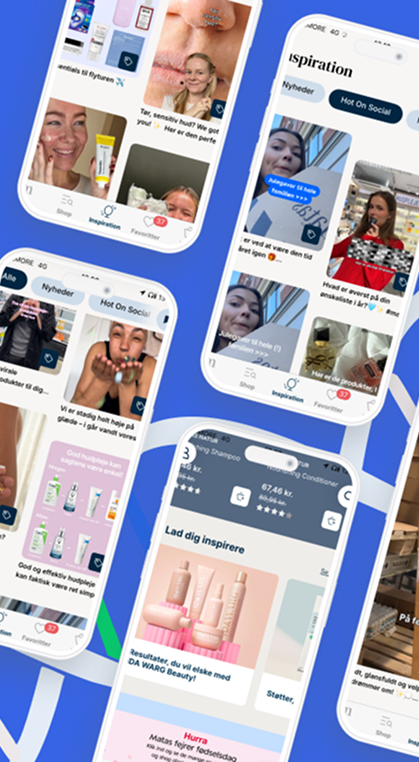
Shopper behavior, however, has changed. People spend hours in feeds where content continuously adapts to what captures their attention. The experience is fluid, responsive, and personal. That expectation is now moving into e-commerce.
Shoppertainment is a personalized discovery experience built as a continuously updating feed. Products, content, and interactions appear in one flow, shaped by how each shopper behaves in real time.
From static pages to adaptive discovery
Traditional e-commerce discovery relies on fixed page structures. Category listings, recommendation carousels, and search results appear in predictable formats. While personalization can influence these elements, the underlying structure rarely changes.
That model starts to break down as shopper behavior becomes more fluid. People are used to feeds that respond instantly to what they pay attention to. Discovery follows the same direction.
This is the gap that platforms like Relewise are designed to close - through two connected features: Adaptive Discovery and User Engagement.
Adaptive Discovery replaces isolated pages with a continuously updating feed where products and content respond to behavior in real time. But a feed is only as smart as the signals feeding into it. That's where User Engagement comes in - capturing micro-interactions like scroll depth, dwell time, favorites, and reactions, and turning them into structured input for personalization.
Every click, pause, and heart becomes a signal. The feed grows more relevant with each interaction, and those same signals power personalization across search, recommendations, email, and campaigns.
Instead of navigating isolated pages, shoppers explore a stream that evolves as they interact. The experience feels less mechanical and more exploratory.
Every click, pause, and heart becomes a signal. The feed grows more relevant with each interaction, and those same signals power personalization across search, recommendations, email, and campaigns.
Instead of navigating isolated pages, shoppers explore a stream that evolves as they interact. The experience feels less mechanical and more exploratory.
Why retailers are paying attention
Product discovery has always been a core growth lever. Improvements in search, recommendations, and merchandising directly influence conversion rates and average order value.
Adaptive Discovery and User Engagement add another dimension by increasing engagement. When the experience reacts immediately, shoppers explore more and stay longer. That creates more opportunities to influence decisions and exposes a broader part of the catalog.
At the same time, every interaction generates first-party data. These signals strengthen personalization across search, recommendations, email, and campaigns, creating a connected feedback loop across the entire commerce journey.
Early adoption in European e-commerce
As European retailers begin to see these benefits, early adoption is already taking shape across specific sectors.
Europe’s adoption of these trends has historically been more cautious than in Asia, where livestream commerce and influencer-driven shopping are already deeply integrated into everyday behavior. However, the tide is turning. A growing group of European retailers has begun experimenting with feed-driven experiences, particularly in high-inspiration categories like fashion, beauty, and lifestyle.
These early implementations demonstrate how an adaptive model complements rather than replaces traditional navigation. Search and static listings still handle “I know what I want” missions, while adaptive feeds capture “show me something I’ll love” moments.
One major player already utilizing this layered approach is Matas, one of Denmark's largest retailers, who sees this as a way to unify their brand authority with the shopping experience:
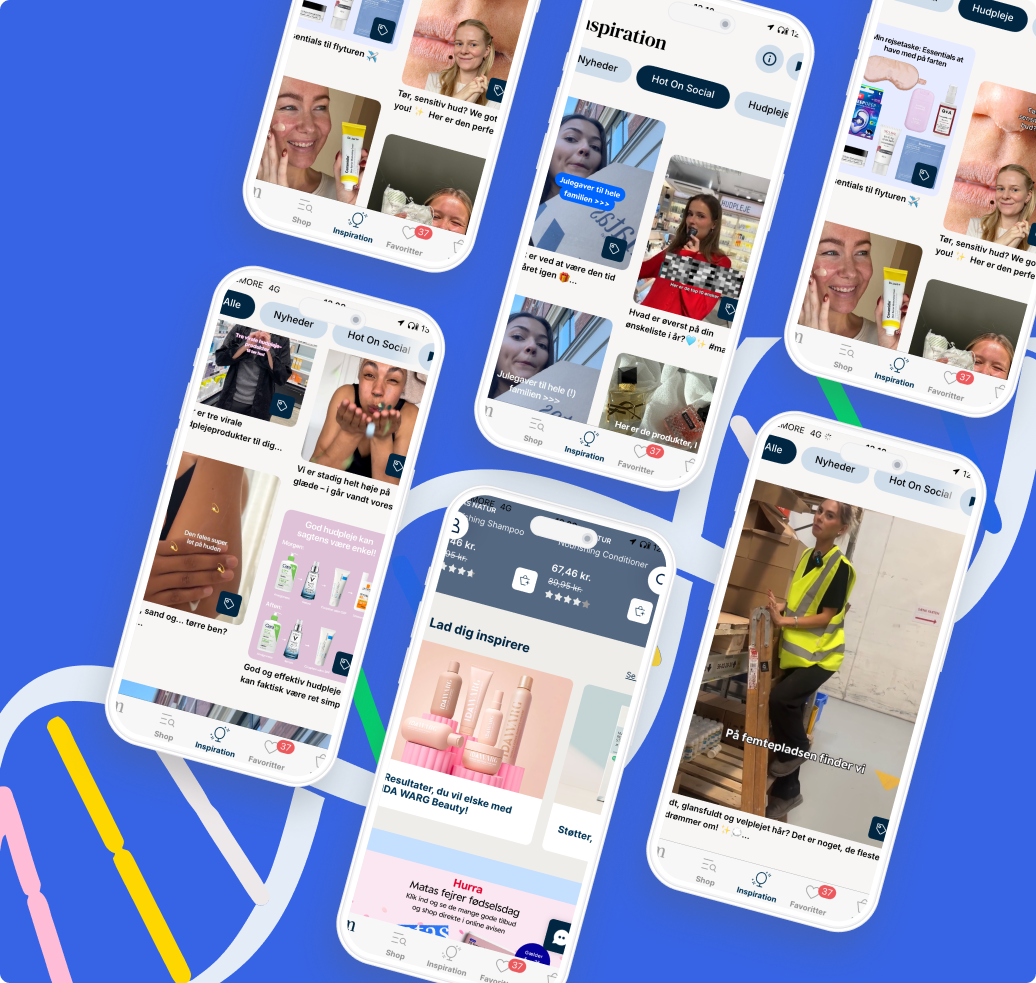
Retailers like Kop & Kande are already putting User Engagement to work in practice. By integrating a "Favorite" (❤️) icon directly into their discovery flow, they turn a simple UI element into a powerful data point. When a shopper hearts an item, they aren't just saving it for later — they are actively training the discovery engine to prioritize their preferences. Those signals then power automated triggers across email, restock notifications, and recommendations.
The role of behavioral signals
Traditional systems rely on a limited set of signals, primarily product views and purchases. These signals are valuable but delayed, and they miss much of the intent that happens before a decision is made.
Relewise’s feature, User Engagement, expands that signal layer. It captures micro-interactions like scroll behavior, dwell time, favorites, and reactions, and turns them into structured input for personalization. For shoppers, the feed grows more relevant with each interaction; for retailers, those same signals power automated triggers across email, restock notifications, and recommendations.
Turning engagement into measurable growth
Shoppertainment is more than an entertainment layer - its real value lies in how engagement translates directly into commercial outcomes.
When discovery becomes responsive, shoppers explore more of the catalog. This increases exposure to long-tail products and improves cross-selling opportunities.
Adaptive feeds also make it possible to integrate editorial content, campaigns, and retail media directly into the discovery flow. Because everything is personalized, these elements appear in context and feel relevant.
Discovery, user engagement, and conversion begin to reinforce each other.
Looking ahead
E-commerce is moving from static navigation toward experiences that learn continuously from behavior.
The opportunity for retailers is to adopt technologies that capture and activate these signals across the entire journey. When engagement data feeds directly into search, recommendations, and merchandising logic, personalization becomes both scalable and precise.
As more retailers adopt feed-based discovery, shoppertainment will become a standard part of e-commerce. Early movers will gain a deeper understanding of how their customers explore and decide.
But strip away the strategy talk, and it comes down to this:
Forget the frictionless checkout and focus on the ✨ addictive discovery ✨
Why settle for being another tab in a browser when you can be a bookmarked favorite?
Would you like to learn more about shoppertainment?
Then check out our dedidcated shoppertainment site
