


How shoppertainment is redefining e-commerce personalization and why European retailers are taking notice.
Shopping has always had an entertainment side - the magnetic pull of a well-designed store and the thrill of discovering something unexpected. Retail has never been purely transactional.
What's changed is that this experience has gone digital, and it's become remarkably good at holding our attention.
Social media platforms have very much blurred the line between scrolling and shopping, turning entertainment into a gateway for commerce. From that shift, a concept emerges: shoppertainment.
From static pages to adaptive discovery
Traditional e-commerce discovery relies on fixed page structures - category listings, recommendation carousels, search results - all appearing in predictable formats. Personalization can influence what shows up, but the underlying structure stays the same.
That model is increasingly at odds with how people actually browse. The expectation of experiences that react in real time is now making its way into e-commerce.
This is the gap that platforms like Relewise are designed to close - through two features: Adaptive Discovery and User Engagement. Together, they form a smart e-commerce personalization platform built for how shoppers actually browse.
Adaptive Discovery replaces isolated pages with a continuously updating feed where products and content respond to behavior in real time, generated dynamically through a Feed API that re-ranks results as shoppers browse.
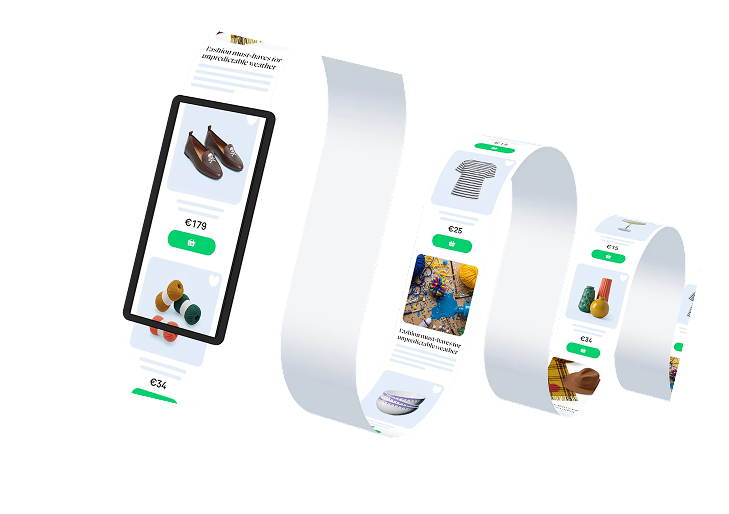
But a feed is only as smart as the signals feeding into it. That's where User Engagement comes in - capturing micro-interactions like scroll depth, dwell time, favorites, and reactions, and turning them into structured input for real-time personalization.
Every click, pause, and like becomes a signal. The feed grows more relevant with each interaction, and those same signals improve personalization across , AI-driven recommendations, personalized search, email, and campaigns.
Instead of navigating isolated pages, shoppers explore a stream that evolves as they interact. The experience feels less mechanical and more exploratory.
Why retailers are paying attention
Product discovery has always been a core growth lever. Improvements in search, recommendations, and merchandising directly influence conversion rates and average order value.
When the experience reacts to what a shopper is actually doing, they naturally explore more and stick around longer - surfacing more of the catalog and creating more chances to influence decisions along the way.
Adaptive Discovery and User Engagement are what make that possible.
At the same time, every interaction generates first-party data. Those signals feed back into every touchpoint downstream, so the experience keeps getting sharper.
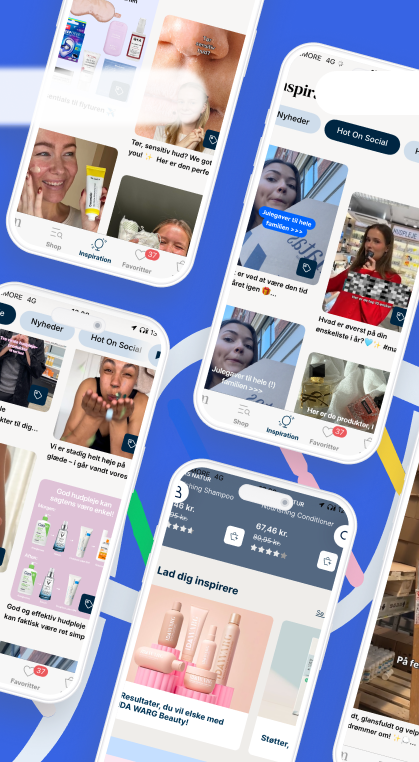
One retailer already putting this into practice is Matas, one of Denmark's largest retailers. For them, shoppertainment isn't just a discovery tool - it's a way to bring their brand universe and shopping experience together in one place:

With Shoppertainment, we now have a unique opportunity to bring together and showcase our extensive univserse of beauty and wellbeing in one unified platform. Previously, inspiration and knowledge were distributed across our own and external channels. Now we can provide customers with a far more cohesive, engaging, and immersive experience of our full assortment and expertise.
Jonas Levring, SVP Digital Platforms and Projects, Matas
Read full case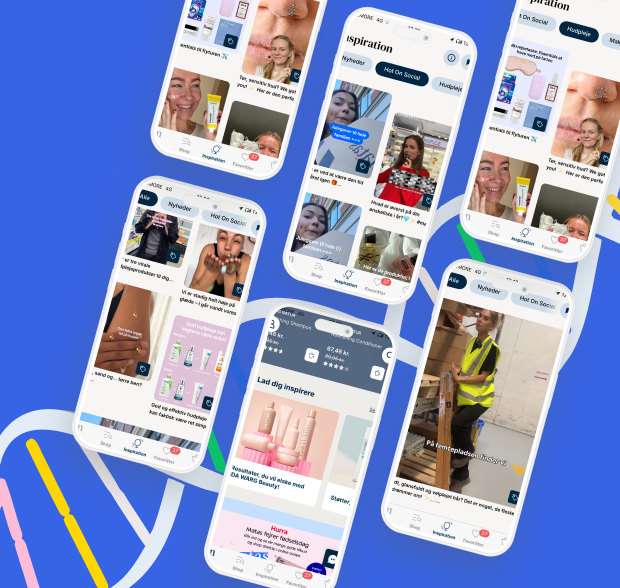
The role of behavioral signals
Traditional systems rely on a limited set of signals, primarily product views and purchases. These signals are valuable but delayed, and they miss much of the intent that happens before a decision is made.
Relewise's User Engagement feature goes deeper than that. It picks up on the small things - how long someone lingers on a product, what they save, how they scroll - and uses those signals to sharpen personalization over time.
For retailers, that translates into: triggering emails, restock alerts, and recommendations automatically, with everything stored and surfaced directly in search and recommendation responses.
Turning engagement into measurable growth
Engagement has direct commercial consequences.
When discovery becomes responsive, shoppers explore more of the catalog. This increases exposure to long-tail products and improves cross-selling opportunities through more precise personalized product recommendations.
Adaptive feeds also make it possible to integrate editorial content, campaigns, and retail media directly into the discovery flow. Because everything is personalized, these elements appear in context and feel relevant. Explore our Retail Media feature to see how it fits into the mix.
Early adoption in European e-commerce
As European retailers begin to see these benefits, early adoption is already taking shape across specific sectors.
Europe’s adoption of these trends has historically been more cautious than in Asia, where livestream commerce and influencer-driven shopping are already deeply integrated into everyday behavior. However, the tide is turning. A growing group of European retailers has begun experimenting with feed-driven experiences, particularly in high-inspiration categories like fashion, beauty, and lifestyle.
These early implementations demonstrate how an adaptive model complements rather than replaces traditional navigation. Search and static listings still handle “I know what I want” missions, while adaptive feeds capture “show me something I’ll love” moments.
Looking ahead
E-commerce is moving toward experiences that learn continuously from behavior.
The retailers who move early will build an advantage by getting a deeper understanding of how their customers explore and decide, and a personalization engine that gets more precise with every interaction.
Want to turn more browsers into buyers?
See how you can build a personalized feed that moves shoppers from inspiration to checkout
