


See why personalized search and relevant product recommendations have become essential in B2B buying, helping teams move quickly through complex product ranges.

After several meetings with B2B prospects, one theme kept coming up: even companies without close competitors are now focusing heavily on customer experience to drive revenue.
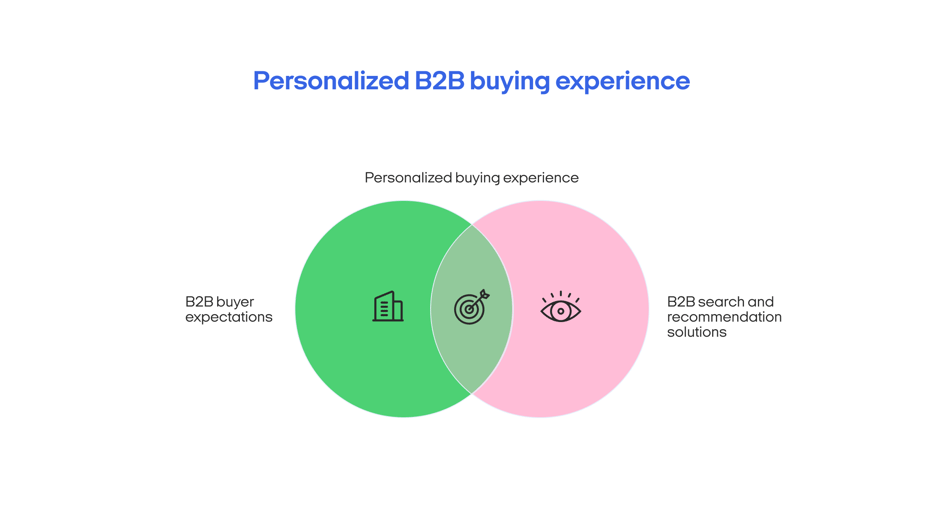
A key insight is the impact that personalized search and recommendations can have when they’re built for B2B. These systems understand the relationship between individual buyers and the companies they represent, and they offer features that make a real difference in complex buying processes.
Here are five reasons why a personalized search and recommendation setup can be a powerful advantage for B2B companies:
1. B2B buyers expect consumer-level convenience
B2B buyers increasingly expect the same ease and personalization they get in their personal shopping. They want a tailored experience that reflects their company’s needs, not a generic catalog.
A B2B-ready search and recommendation solution uses buyer history, preferences, and past transactions to surface products that match their company’s procurement patterns. Unlike B2C systems, it understands the complexity behind B2B purchasing, like:
- Roles
- Company structures
- Department or country preferences
- Long-term agreements.
Advanced filtering makes it possible to show different products to different departments or subsidiaries based on contracts or assortments. Each buyer sees what’s relevant for them, creating a more intuitive and friction-free experience.
2. Streamlined product discovery for complex catalogs
B2B catalogs are often large and filled with technical, industry-specific products. Without strong, AI-driven search and recommendations, buyers can spend too much time trying to find what they need.
A B2B-ready solution reduces this complexity by using machine-learning insights to understand the buyer’s industry, past purchases, and the company they’re buying for. It narrows results, surfaces relevant options, and recommends complementary products or services. Custom filters ensure buyers aren’t overwhelmed by irrelevant items, showing only products that fit their company’s needs or purchasing history. This helps buyers find the right products faster and creates more opportunities for upselling and cross-selling.
3. Improved decision-making with AI-powered insights
B2B purchasing usually involves multiple stakeholders and depends on clear data. Teams need access to detailed specifications, pricing structures, and contract options to make informed decisions.
A B2B-specific search and recommendation system provides targeted suggestions based on industry trends, historical purchasing patterns, and business needs. Configurable filters can prioritize products based on predictive patterns, such as purchase volume or frequently bought-together behavior across departments.
Procurement teams can see bundled options or replenishment signals informed by their company’s buying history, making it easier to plan, compare, and select the right products over time.

4. Strengthening long-term buyer relationships
B2B relationships are long-term, and buyers expect partners who understand their needs over time. A behavior-aware search and recommendation system helps companies support buyers proactively by suggesting products that fit future needs or ongoing projects.
For example, the system can use predictive signals to notify buyers when stock is low on items they purchase often, or surface relevant upgrades based on previous orders. By combining purchasing behavior with real-time availability, companies can keep buyers informed about options that matter to them. This level of attention strengthens the relationship and supports higher retention and long-term revenue.
5. Increasing revenue by aligning with buyer preferences
B2B purchases are often significant and recurring, so accurate recommendations at the right moment can have a direct impact on revenue. When suggestions match a company’s requirements, buyers are more likely to increase order sizes or add complementary items.
If a company regularly buys specific machinery, a B2B search solution can recommend compatible accessories, maintenance plans, or newer models. Pattern-learning models can identify replenishment cycles and prompt future orders automatically. These recommendations support broader operational needs, leading to higher order volume and more frequent purchases.
Conclusion
For B2B companies, even those without direct competition, delivering a personalized buying experience is key to long-term success. An AI-driven search and recommendation solution built for B2B can interpret the complex dynamics between buyers and the companies they represent. By reducing friction in large or technical catalogs, supporting data-driven decisions, and strengthening relationships, businesses can improve sales processes and open new revenue opportunities. Personalized search tailored to the B2B market helps companies serve buyers more effectively, driving both satisfaction and growth.
So, what else can B2B personalization do?
See all features and find some cases studies on our B2B page. Click below!
